
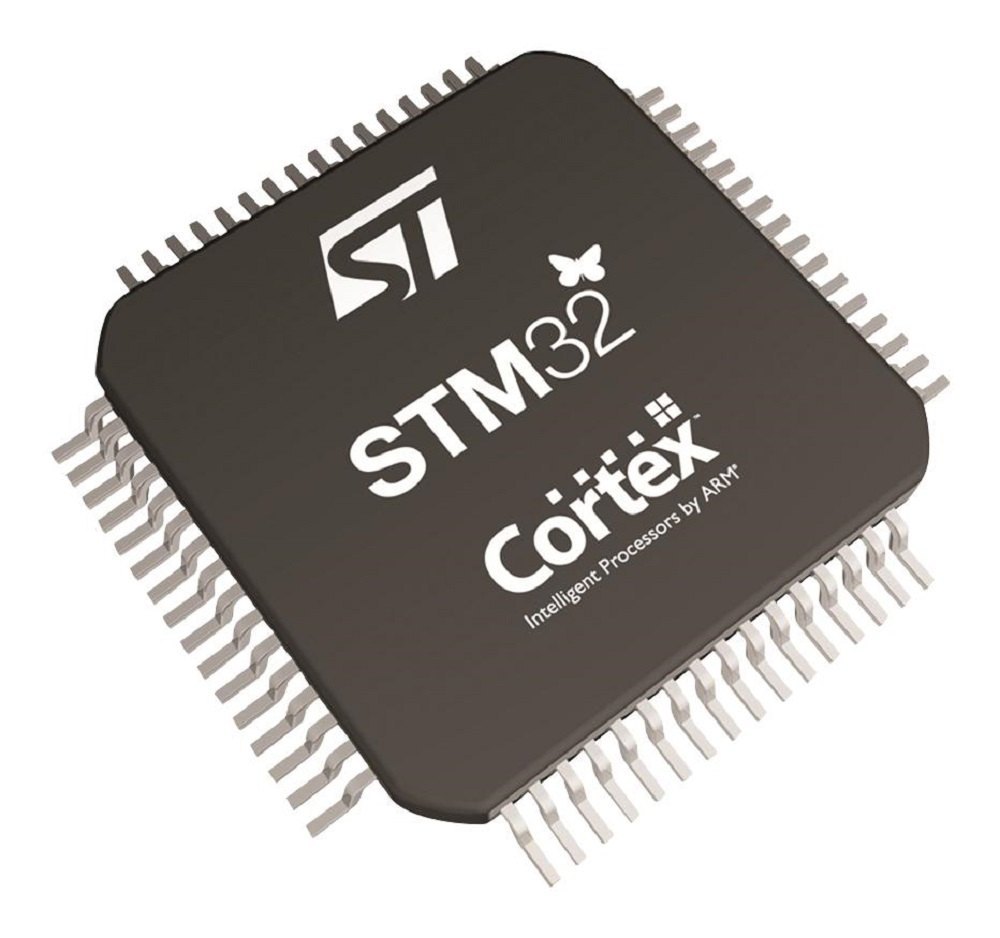
Embedded systems are everywhere around us — from washing machines and smart TVs to industrial automation systems, drones, medical devices, and automotive electronics. At the heart of many of these systems lies a microcontroller responsible for controlling hardware, processing data, and running firmware applications.
One of the most popular microcontroller families used in modern embedded systems is the STM32 series developed by STMicroelectronics.
In this article, we will explore what STM32 microcontrollers are, why they are widely used in industry, and how beginners can start learning STM32 development.
What is STM32?
STM32 is a family of 32-bit microcontrollers based on ARM Cortex-M processor cores. These microcontrollers are designed for embedded applications requiring:
- High performance
- Low power consumption
- Real-time processing
- Rich peripheral support
- Industrial reliability
STM32 microcontrollers are widely adopted because they provide an excellent balance between:
- Performance
- Cost
- Power efficiency
- Development ecosystem
Today, STM32 devices are used in:
- Industrial automation
- IoT products
- Robotics
- Automotive electronics
- Medical devices
- Consumer electronics
- Smart home systems
Understanding Microcontrollers
Before diving deeper into STM32, it is important to understand what a microcontroller actually is.
A microcontroller is a compact integrated circuit that contains:
- CPU (processor core)
- Flash memory
- RAM
- GPIO peripherals
- Timers
- Communication interfaces
Unlike a general-purpose computer, a microcontroller is designed for dedicated tasks inside embedded systems.
For example:
- A washing machine uses a microcontroller to control motors and sensors
- A smart thermostat uses a microcontroller for temperature monitoring
- An automotive ECU uses multiple microcontrollers for engine management
STM32 microcontrollers are essentially highly capable embedded computers integrated into a single chip.
Why is STM32 So Popular?
STM32 has become one of the most popular embedded platforms because it offers several advantages for both beginners and professional engineers.
1. Wide Range of Microcontrollers
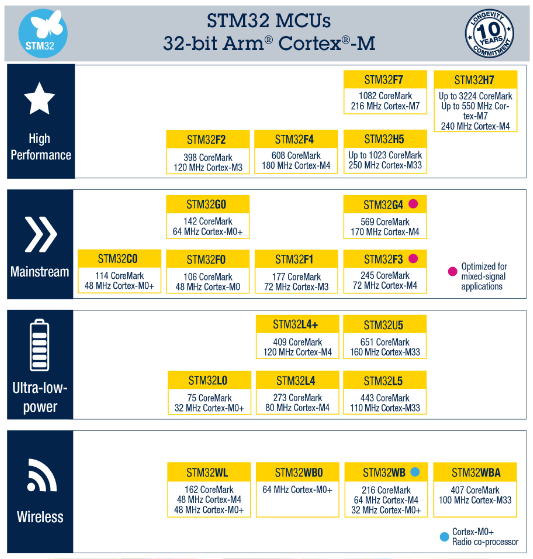
STM32 offers many product families designed for different applications:
- STM32F series for general-purpose applications
- STM32L series for low-power devices
- STM32H series for high-performance systems
- STM32G series for efficient mixed-signal applications
- STM32MP series for embedded Linux systems
This flexibility allows developers to choose a microcontroller that matches their exact project requirements.
2. ARM Cortex-M Architecture
STM32 microcontrollers use ARM Cortex-M processor cores, which are industry-standard embedded processors.
Advantages of ARM Cortex-M include:
- High performance
- Low power operation
- Efficient interrupt handling
- Rich development tools
- Large community support
Depending on the application, STM32 devices may use:
- Cortex-M0
- Cortex-M3
- Cortex-M4
- Cortex-M7
- Cortex-M33
Each processor family provides different performance capabilities and hardware features.
3. Rich Peripheral Support
One of the biggest strengths of STM32 is its extensive peripheral ecosystem.
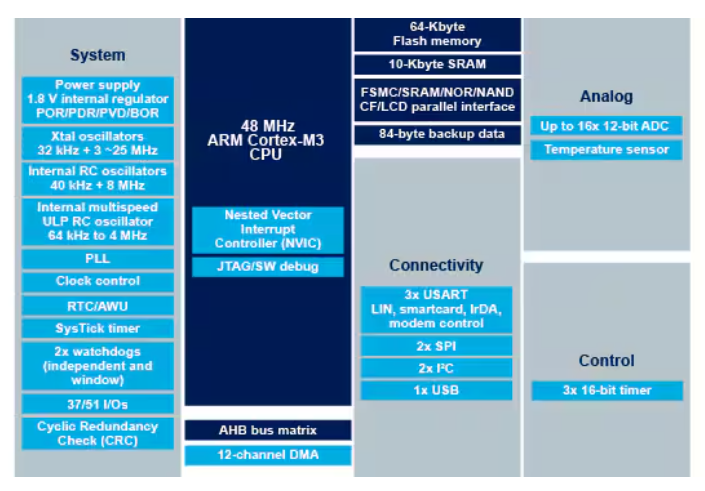
Common peripherals include:
- GPIO
- UART
- SPI
- I2C
- CAN
- USB
- Ethernet
- ADC
- DAC
- Timers
- PWM
These peripherals allow STM32 microcontrollers to interface with:
- Sensors
- Displays
- Motors
- Communication modules
- Industrial devices
Without requiring many external components.
STM32 Development Ecosystem
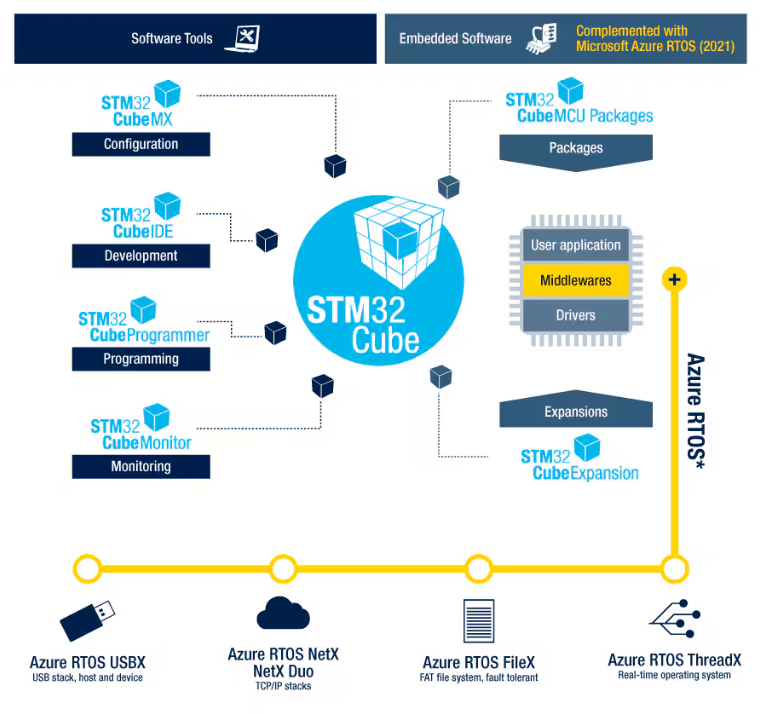
Another reason STM32 is beginner-friendly is its excellent software ecosystem.
STM32CubeIDE
STM32CubeIDE is the official integrated development environment from STMicroelectronics.
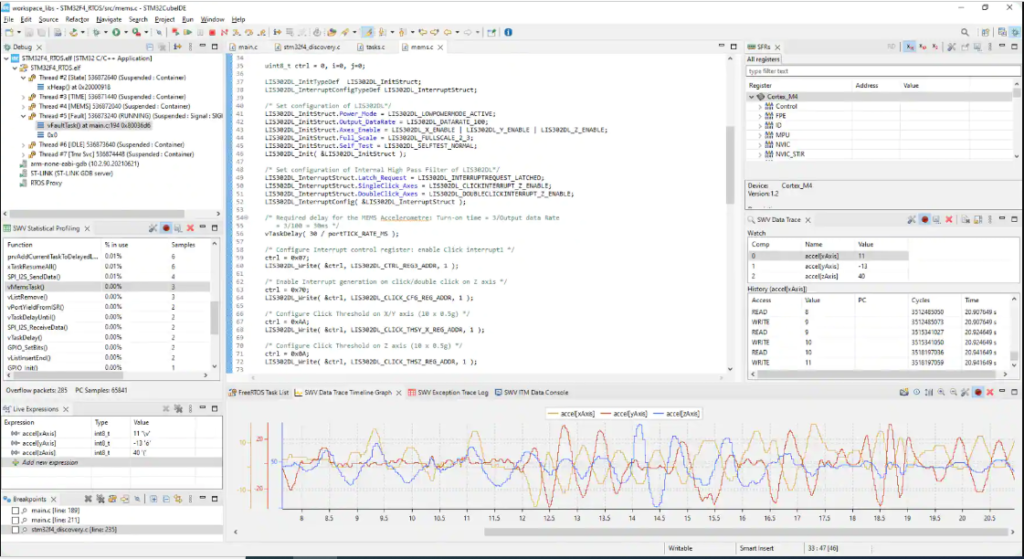
It combines:
- Code editor
- Compiler
- Debugger
- Project management tools
Into a single development environment.
STM32CubeMX
STM32CubeMX is a graphical configuration tool used to:
- Configure peripherals
- Configure clock settings
- Generate initialization code
- Simplify hardware setup
This greatly reduces the complexity of embedded firmware initialization.
HAL and LL Drivers
STM32 provides two main software libraries:
- HAL (Hardware Abstraction Layer)
- LL (Low Layer)
HAL drivers are beginner-friendly and simplify development, while LL drivers provide lower-level control and better performance.
STM32 Development Boards
To start learning STM32, you need a development board.
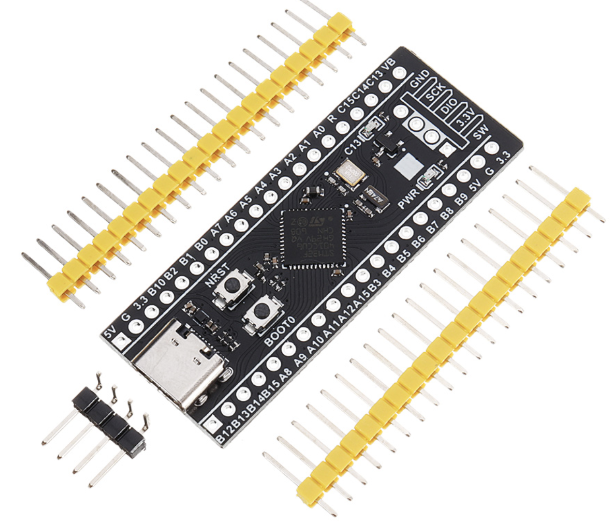
Popular beginner boards include:
- STM32 Nucleo board
- STM32 Discovery boards
- Blue Pill boards
- Black Pill boards
These boards provide:
- USB programming
- Built-in debuggers
- GPIO access
- Peripheral support
Making it easier to start experimenting with embedded programming.
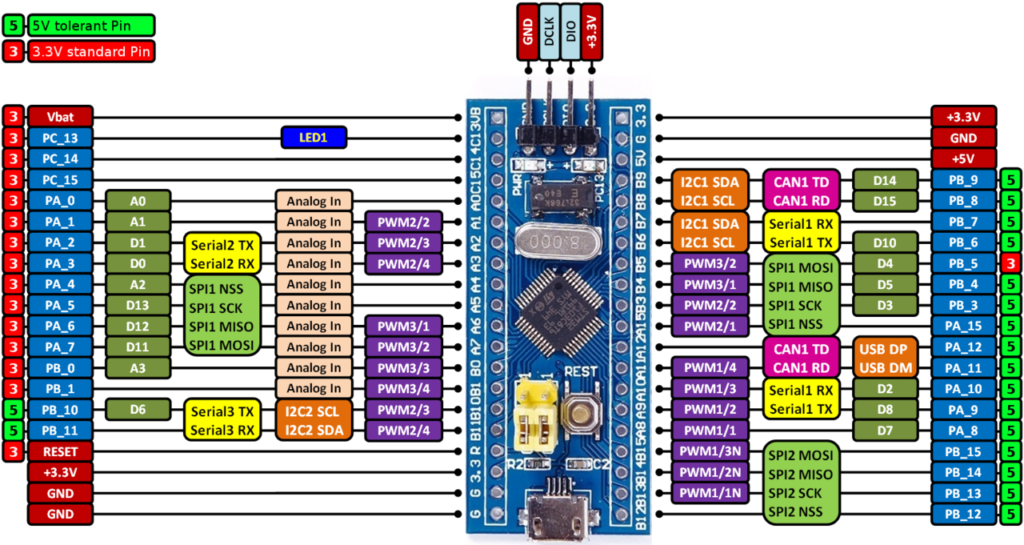
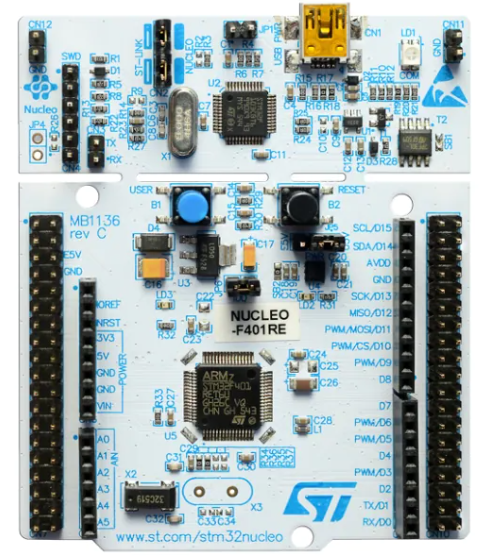
Boards we are going to use for our tutorials:
Blue Pill STM32F103
Nucleo-F401RE
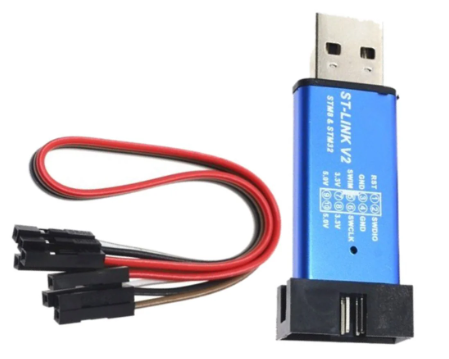
STLINK V2 Kit(If & when needed):
Real-World Applications of STM32
STM32 microcontrollers are used across many industries because of their reliability and flexibility.
Common applications include:
- Industrial automation systems
- Robotics controllers
- IoT devices
- Automotive ECUs
- Battery management systems
- Smart meters
- Medical monitoring equipment
- Consumer electronics
Learning STM32 can open opportunities in:
- Embedded firmware engineering
- IoT development
- Industrial automation
- Robotics
- Automotive software
- Product development
STM32 microcontrollers provide one of the best platforms for learning embedded systems and professional firmware development. This journey will gradually take you from beginner-level firmware development to advanced embedded systems engineering.